Social Events & Meetings
Employment Status: Employed or Self-employed advice for Engagers by Sponsor Francis Clark
Employment Status: Employed or Self-employed advice for Engagers by Sponsor Francis Clark

Employment Status: Employed or Self-employed advice for Engagers
Status is not a matter of choice...
.
Francis Clark LLP
The facts surrounding a working relationship will determine whether the worker is an employee or self-employed. However, the working relationship between the worker and the engager IS a matter of choice.
Getting the employment status position wrong can have serious financial consequences for an engager. If HMRC reviews the engager’s or employer’s records and considers that the consultant was not genuinely self-employed but rather the terms and conditions were that of an employee, the engager or employer will be liable for the PAYE tax and national insurance contributions (NIC) considered due in respect of the payments made. HMRC can look to go back a number of years to recover the tax and NIC considered due. In addition to the tax and NIC liabilities, interest and penalties will also be due.
Therefore it is crucial that the correct employment status is established at the start of the engagement and that clarification is sought in areas of concern as this should help to prevent disputes with HMRC at a later date.
The law does not define ‘self-employment’ or ‘employment’ so it is the terms and conditions of the particular engagement that determine whether the contract is one of employment or self-employment. If the individual is engaged under ‘a contract of service’ then they will be an employee and PAYE would apply. Only genuine self-employed consultants should be paid outside of the PAYE payroll system.
The onus is on the engager or employer to ensure that they are applying the correct employment status. The fact that an individual may say they are self-employed or that they have worked previously as a self-employed consultant is irrelevant in determining their employment status as the decision must be made on the current terms and conditions of the engagement at the point of engagement.
The legislation does not define what constitutes a ‘contract of service’ or a ‘contract for service’ but guidance from employment status case law as handed down by the Courts over the years is used to determine the correct status to be applied. The Courts have identified various factors that help to determine whether a contract is one of employment or self-employment.
When looking at these relevant factors there are certain indicators that help to determine whether the particular engagement is one of employment or self-employment.
Common indicators of employment
-
The contractor has the right to (even if that right is rarely used) control what the worker has to do, where the work is carried out, when the work is done and how the work is carried out
-
The worker supplies only his or her own small tools, and no significant equipment or materials
-
There is no possibility that the worker will suffer a financial loss, for example the worker does not risk any of his or her own money
-
The worker has to provide personal service. That is, he or she is expected to carry out the work him or herself and cannot provide a substitute and/or additional help to carry out the work
-
The worker has no business organisation, for example business premises, stock, materials or own workforce
-
The worker is paid by the hour, day, week or month
Common indicators of self-employment
-
Within the overall project deadline, the worker has the right to decide how the work is carried out and when the work will be done
-
The worker tenders for a job and if the job ends up costing more than originally estimated, will bear any additional costs
-
The worker has the right to hire other people to either carry out the work or work with him or her, those individuals being answerable to, and being paid by him or her, to do the work
-
The worker is paid an agreed amount for the job regardless of how long it takes
-
The worker supplies the materials, plant or heavy equipment needed for the job
Once the terms and conditions of the engagement have been established and all the relevant factors considered, then the engager or employer should be in a position to make the decision as to whether the overall effect is that of an individual in business on his or her own account (self-employed) or that the individual is actually an employee of the business.
Whilst there are various factors to consider when looking to establish the appropriate employment status position, HMRC has a tendency to place greater emphasis on certain areas and these are the right of control as to what, when, where and how the work is carried out, whether the worker has the right to provide a substitute and whether through sound management and working efficiently would it be possible to make a profit (and/or make a loss) - thus financial risk.
This is borne out by HMRC’s own tool that is used to establish the employment status position. This tool is accessible through the Gov.uk website and is available for anyone to use to check an employment status position. This tool is the Employment Status Indicator (ESI).
The ESI can be used as part of the process when engaging sole traders and will ask a series of questions regarding the working arrangements of the consultant and once completed the ESI tool will provide an opinion of the individual’s employment status position.
Clearly the questions need to be answered accurately to reflect the terms and conditions under which the individual is providing their services otherwise any opinion will be invalid. HMRC will usually be bound by the ESI outcome provided it was completed accurately.
A copy of the status outcome should be downloaded and kept for future reference as this will need to be produced if HMRC questions the employment status position. HMRC may still look to challenge the employment status position even with an ESI outcome of self-employment but nevertheless it would be for HMRC to show that the results cannot be relied upon.
Ultimately getting the employment status position wrong can have disastrous consequences for an engager’s or employer’s business if HMRC is successful in re-classifying the self-employed workforce as employees.
This publication is produced by Francis Clark LLP for general information only and is not intended to constitute professional advice. Specific professional advice should be obtained before acting on any of the information contained herein. Whilst Francis Clark LLP is confident of the accuracy of the information in this publication (as at the date of production), no duty of care is assumed to any direct or indirect recipient of this publication and no liability is accepted for any omission or inaccuracy.
Like Back to Top Seen 508 times Liked 0 times
Subscribe to Updates
If you enjoyed this, why not subscribe to free email updates and join over 1292 subscribers today!
Subscribe to updates
Alternatively, you can subscribe via RSS 
All email subscriptions must be confirmed to comply with GDPR.
Related Posts
05th September 2017 | July 2017
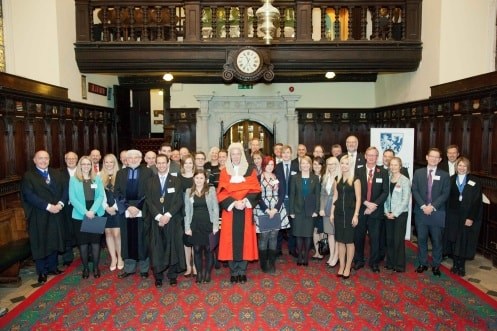
DASLS Newly Qualified Solicitors Admissions Ceremony Monday 9th October 2017 at 5.30pm for 6pm at Exeter Guildhall — by invitation only! Did you / will you qualify between 1st September 2016 and 30th September 2017? If so, please contact Monique Bertoni at DASLS office to make sure that you receive your personal invitation. Email: Monique@dasls.com or call 01392 366333 Devon & Somerset Law Society would like to congratulate all NQ Solicitors from Member Firms in DASLS area. Below photo of the 2016 Admissions Ceremony...
05th September 2017 | July 2017

Devon Air Ambulance delighted to be chosen as the President’s chosen Charity Devon Air Ambulance (DAA) are delighted to have been chosen, alongside Dorset and Somerset Air Ambulance (DSAA), as Devon and Somerset Law Society’s President’s chosen Charity/ies for the years 2017/19. Business support is an essential and integral part of DAA’s fundraising. DAA are immensely proud and excited to be celebrating 25 years of service this year and it is due to the fantastic support DAA receives from the people, businesses and communities of Devon that they have reached this impressive milestone. DAA have continued to grow and develop the service they provide and today they own two Eurocopter EC135 helicopters which operate seven days a week. In 2016 DAA assisted 843 patients who had suffered either life threatening or life changing incidents. It costs £5.5million every year to keep Devon’s Air Ambulances flying and they are extremely proud to be independent of Government and National Lottery Funding; this safeguards the service for the long-term and ensures they can deliver what the people of Devon tell them they want from their Air Ambulance. With one helicopter based in Exeter and one in North Devon they can get to most of Devon within 10 minutes and the whole of Devon within 15. The speed of DAA’s service ensures patients receive treatment within the critical period immediately following acute illness or an accident before they are conveyed to the appropriate specialist treatment centre; in 2016 29% of DAA’s missions bypassed the nearest hospital to ensure patients were taken to the hospital most appropriate for their needs. This ensures all airlifted patients receive the best possible care and have the best chance of survival. In addition, DAA has substantially improved patient care through the creation of a ground breaking Master’s Degree for air paramedics aimed at making them amongst the highest qualified in the profession. Working with Plymouth University, DAA has created a qualification which will put Devon on the map as a centre of excellence for pre-hospital critical care. In November 2016 DAA extended their service to operate until midnight, meaning they can help even more people. To enable their night flying they approached local communities to get involved to create a network of Community Landing Sites all over Devon. These surveyed, flood lit landing sites are funded and managed by the communities themselves and ensure DAA can land safely after dark. DAA are delighted that over 160 communities are now involved in setting up their own Community Landing Site. As one of only five Air Ambulances in the UK flying at night, DAA are very proud that the culmination of several years planning and preparation carried out by the operations team, pilots, paramedics and Helicopter Emergency Medical Service (HEMS) dispatchers, means they can respond to emergencies until midnight every day. At the heart of all that DAA do is their patients. Through their 25 years of service they’ve helped over 24,000 patients, but they only know of around 1,200 of these. Many people are unaware, but due to patient confidentiality DAA don’t know who they airlift unless the patients contact them. DAA love to hear from the people they’ve helped and pass on news to the aircrew of how their patients are recovering. If you or anyone you know has been airlifted and would like to make contact, please get in touch with their Patient Liaison Officer Debbie via email d.gregory@daat.org or phone 01392 466666. DAA’s Fundraising Director Caroline Creer added “We are so grateful to the Devon and Somerset Law Society to have selected us as one of their chosen charities, alongside Dorset and Somerset Air Ambulance. Whilst we are a separate charity to DSAA we have a great relationship with them and when required we have crossed borders and airlifted patients from Dorset and Somerset. We look forward to building a strong working rel...
05th September 2017 | July 2017

News from the Devon & Somerset Junior Lawyers' Division This month's article has been written by the JLD's Social Secretaries, Beth Nash and Philippa Collison and the Sports Representative, Hannah McGown. Social Events Throughout the year the JLD's social secretaries have the arduous but rewarding task of organising a number of social events for young professionals across Devon and Somerset. Whether it be cocktails after a day's work, a wine and cheese tasting or themed event, the social events are always a highlight of the JLD calendar. On Friday 9 June, junior lawyers from across the region were treated to a vintage Hollywood extravaganza at the annual Devon & Somerset Junior Lawyers' Division Summer Ball. Held at Sandy Park, guests were welcomed with a glass of prosecco, before being treated to live sets from a local jazz band throughout the sumptuous three course dinner. After dinner the disco took hold with some fun group photos in the obligatory photo booth. Guests also had the opportunity to purchase raffle tickets throughout the night, with loads of prizes up for grabs including vouchers for champagne afternoon tea for two, and Exeter Chiefs goodies including a squad signed rugby ball and rugby tickets. Over the course of the night, an amazing £373 was raised for YMCA Exeter, this year's Devon & Somerset Junior Lawyers' Division Charity of the Year. They are a local organisation that aims to ensure "all young people can be equipped with the tools they need to achieve economic independence, grow in their unique skills and gifts and ultimately contribute positively to society." The Summer Ball is a key event on the Junior Lawyers' Division calendar, offering guests the chance to meet their peers from other firms around the region, and to catch up with colleagues outside of the work place, as well as taking embarrassing photos in the photo booth! The Devon and Somerset Junior Lawyers' Division would like to extend their thanks to all of the wonderful sponsors who helped to make the event a success, as well as the committee members for their hard work and organisation. For those who attended the event, a link to all of the photos from the evening will be available soon and sent out to those on the JLD mailing list. Sports The sudden change in the weather and the rise in temperature has got our minds back on summer sports and BBQs just in time for the infamous JLD v DASLS Rounders Match. Due to take place on 6 July, this year the two teams will also be joined by members of CILEX as they battle it out to score the most runs. All are welcome to play and the teams will be enjoying a delicious BBQ at the Double Locks after the game. If you are interested in playing please contact Hannah McGown (JLD) onh.mcgown@ashfords.co.uk or Francesca Hobbs (DASLS) on francesca@dasls.com. If football is more your game, watch this space. The JLD will soon be welcoming teams for their summer football tournament to win the coveted JLD Shield....
05th September 2017 | July 2017

Emails to be avoided... by Sponsor Alchemy You know from our previous articles about phishing and spearphishing attacks and how staff are a firm’s weakest links. This time we’re detailing the different types of emails that might appear in your inbox – emails that can look genuine but which could well be from a cyber criminal; emails designed to infect your systems, hold your firm to ransom, prevent your business from operating (think WannaCry) and severely damage your reputation. Emails to be wary of An email that purports to be regarding a completion certification. In a recent phishing simulation exercise this type of email was sent to all staff in a large firm. Within 48 hours 10 people had clicked on the link, some had replied and several staff provided their username and password. An email with links to Google Drive – this could look quite genuine if you’re expecting documents from a client. A variation on the same theme is the email that requests help on a legal matter (and who doesn’t want to assist a prospective client?) with a relevant file available in Dropbox. An email containing scanned documents from a photocopier. This is a good one – invariably works like a charm in law firms where numerous documents are being scanned throughout the working week. Emails with fake invoices – another winner in firms that purchase a lot of items. A variation are emails with fake receipts from Amazon - click the link if you don’t recognise the purchase and want to know more about your supposed order. How about a fax from the government digital fax service which can appear legitimate because it includes the logo. A logo is not a sign that the fax is from a genuine source. Then there are emails from banks requesting account codes. Non-accounts staff often fall for this one. An email from Microsoft advising of unusual sign in activity on your 365 account. Have you had one of those? We get them all the time. Ignore them! And how about warnings from Microsoft that you have xx pending emails in quarantine. Tempting to sort the problem out isn’t it? After all you don’t want to miss a crucial email from a client or prospective client or from a QC that you’re waiting to hear from. These might be genuine but proceed with caution. Emails warning that your inbox is full and your email account will be suspended unless you clean up your inbox. Yes, let’s click on that link and get the overcrowded inbox cleaned up! Then there are the emails telling you your password is expiring – time to choose a new one. And that’s just some of the possibilities! When did YOU last click on a link or respond to an email that maybe… wasn’t genuine? And the solution is? check the source of the email check for typos, dodgy grammar and syntax if in doubt do nothing but report the matter straight away to the person tasked with cyber security – better safe than sorry. never send login details never send bank account details include information on dubious emails in internal newsletters to staff and suppliers provide regular staff awareness training regularly perform phishing simulations to check on how vigilant your staff are and then feedback to them Does your firm provide cyber awareness training? Alchemy Systems have 20 years of IT systems experience and are a Microsoft Partner. Alchemy Systems Designs, Supplies, Installs, Supports and Protects clients’ IT systems. The legal sector has always been a strategic focus. Our staff are experienced in the specific needs and challenges of law firms from service desk to strategy to protection and also provide cyber awareness training. Tel. 0330-043-0801 email. info@alchemysys.co.uk www.alchemysys.co.uk...
06th March 2020 | March 2020

Dear All, This year really is flying by. I have just had my birthday. After updating you previously on the excellent catch up I had with the Law Society CEO Paul Tennant on his visit to the south west last November, I had not expected to be back in touch with him quite so soon. Sadly, this time it was in less happy circumstances. I was, like many of you, shocked and saddened in January to hear the news and see the pictures of the substantial fire at Chancery Lane in London. I have emailed Paul Tennant and James Shepherd, our Law Society Relationship Management Executive, to send our best wishes and we are hoping that the building will be back to full use very soon. As I write this report, preparations are in full swing for the 2020 DASLS Legal Awards & Dinner. As you know the Annual Dinner is being held again this year at Exeter Cathedral. The event is to take place on the 30th April 2020. After the success of last year, we are hoping that once again the event is sold out which would mean we will have around 480 people attending. If you have not done so already, please contact Llew Nicholls and the team at our Awards partners ‘Grow Marketing’ who have worked very hard alongside our very own Tony and Monique to achieve full sponsorship of this event. You can contact Llew to book the remaining places by emailing Llew directly at Llew@growmarketinguk.com. There have been more nominations than ever before with more entries making the short list. Please do not miss this dazzling occasion. You will all have received DASLS latest 2020 training courses programme. Tony Steiner and the team have worked hard to arrange these events. You will see that as members you get preferential rates and if appropriate reduced rates for multiple attendees from your firms. Please take advantage of these services as a proportion of the monies do go to support our Society’s broad continuing education offering. If I do not see you individually before I look forward to catching up with you at the 2020 DASLS Legal Awards and Annual Dinner in April. With very best wishes Nigel Lyons President 2019-2020...
06th March 2020 | March 2020

New AML Regulations and the pursuit of the beneficial owner. Introduction The new Money Laundering & Terrorist Finance (Amendment) Regulations 2019 which came into force on 10 January have modified a number of aspects of the 2017 AML Regulations, with which we have been complying for some time. However, many firms’ procedures hark back to the earlier days of the 2007 Regulations and have not been modified or updated much over recent years. This article seeks to set out what the new Regulations in fact require, and the steps we should be taking in relevant cases. The Policy It has been true for some time that the ultimate aim of all the regulatory rules is transparency – it has always been the case that the use of artificial structures such as trusts, companies, bearer shares, foundations and charities – whilst perfectly legal – have to some extent also benefitted from the extra anonymity they offer to the true owner and recipient of the funds and services we provide. If we offer services to these types of entity, the Regulations require us to go some way to identifying the individuals who are actually benefitting from our services, and this entails uncovering the true ownership of the organisation. Whilst this would be difficult in many instances – Cayman Island companies with bearer shares, for example – we must nevertheless attempt to get some assurances from the creators of the companies, accountants or registrars as to the ownership of the shares, and have some way of being notified of any change in ownership. We also need to be aware of the PEP and Sanctions status of these individuals. Further, for UK companies, the PSC Regulations 2016 impose an exactly similar obligation on the companies themselves to identify their beneficial owners and notify Companies House of any shareholder with 25% or more of the shares or exercising control over management of the business. The Regulations The Regulations provide that we must, as part of our CDD procedures Identify the client – this means coming to know who they are, by name and some other characteristic, e.g. address, date of birth, date of incorporation Verify that identity – by means of reliable and independent data and documentation Identify the beneficial owner (if the client is an entity) – though not necessarily verifying that identity Identify and verify the identity of the person actually instructing us (if not already done). What this means for us When acting for a COMPANY (that is not a listed company) the Regulations require us to obtain Details of the company as registered (which must be proven by a copy of the register entries available from Companies House or equivalent registry) – name, number, registered office address, principal place of business the law to which it is subject details of its governing documentation (its memorandum) names of the directors. Names of any beneficial owners, and the identity of any individual owners of legal entities which own the client Names and verification of the persons instructing us on behalf of the company, and their authority to do so. Note that we cannot rely on the information provided by the company under the PSC Regulations but we must undertake our own research in order to fulfil our CDD duties. Further, if as part of that research, we discover that the Companies House data on PSC’s is incorrect, then we are now under a further obligation to notify the Registrar of Companies of this fact. We also need to establish that PEPs and Sanctions checks are also undertaken. If genuinely positive entries are revealed in response we should undertake enhanced CDD steps or cease to act, accordingly. Electronic searches are a permissible avenue to use provided the search provider can offer us the necessary assurances that the person actually claiming an identity is IN FACT that person. Check also whether ...